
Quarter turns only
90, 180 and 270 cover almost every phone that recorded in the wrong orientation.
Correct sideways footage with a real re-encoded rotation.
Why this rotator
Rotate video is for sideways phone footage. One angle — 90, 180 or 270 — then a playable MP4. It is not a free-rotate dial.
90, 180 and 270 cover almost every phone that recorded in the wrong orientation.
Some players ignore rotation flags. This path re-encodes so the pixels themselves are upright.
The file is processed in this tab. There is no encoding server, account wall, or forced watermark on the download.
Keep the tab open until the file is ready, then play the result before deleting the source master.
How to rotate video
The chosen angle is applied during video processing and rotation metadata is disabled, so pixels are exported in the corrected orientation instead of relying on every player to honor a flag. Start with the original file instead of a copy that has already been re-encoded. Follow the steps below, keep the tab open while progress is moving, and play the downloaded result before deleting the source. This rotate video workflow does not accept a remote video URL and does not fetch media from YouTube, TikTok, cloud drives, or social accounts.
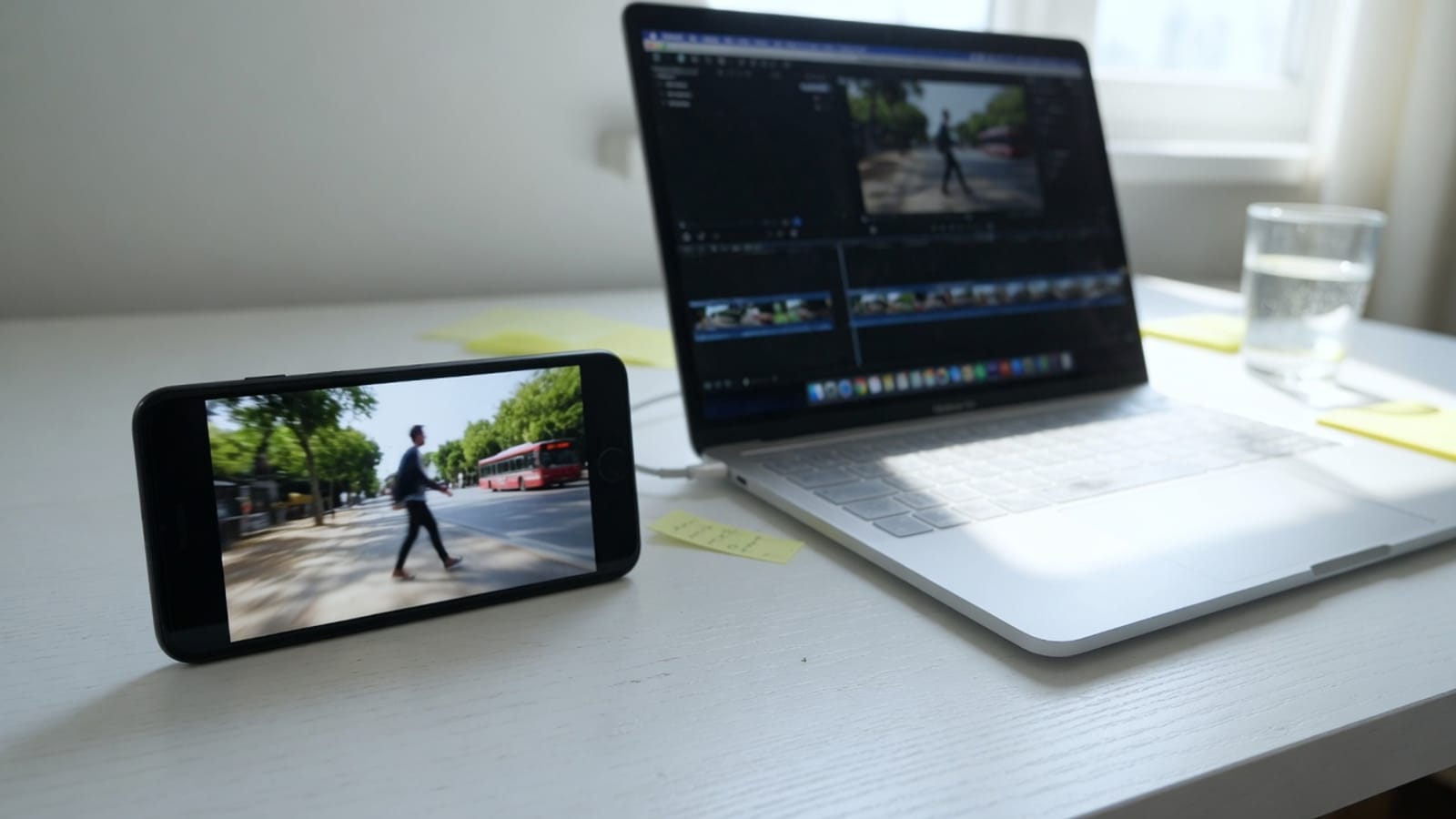
Step 01
Select the sideways or upside-down video.
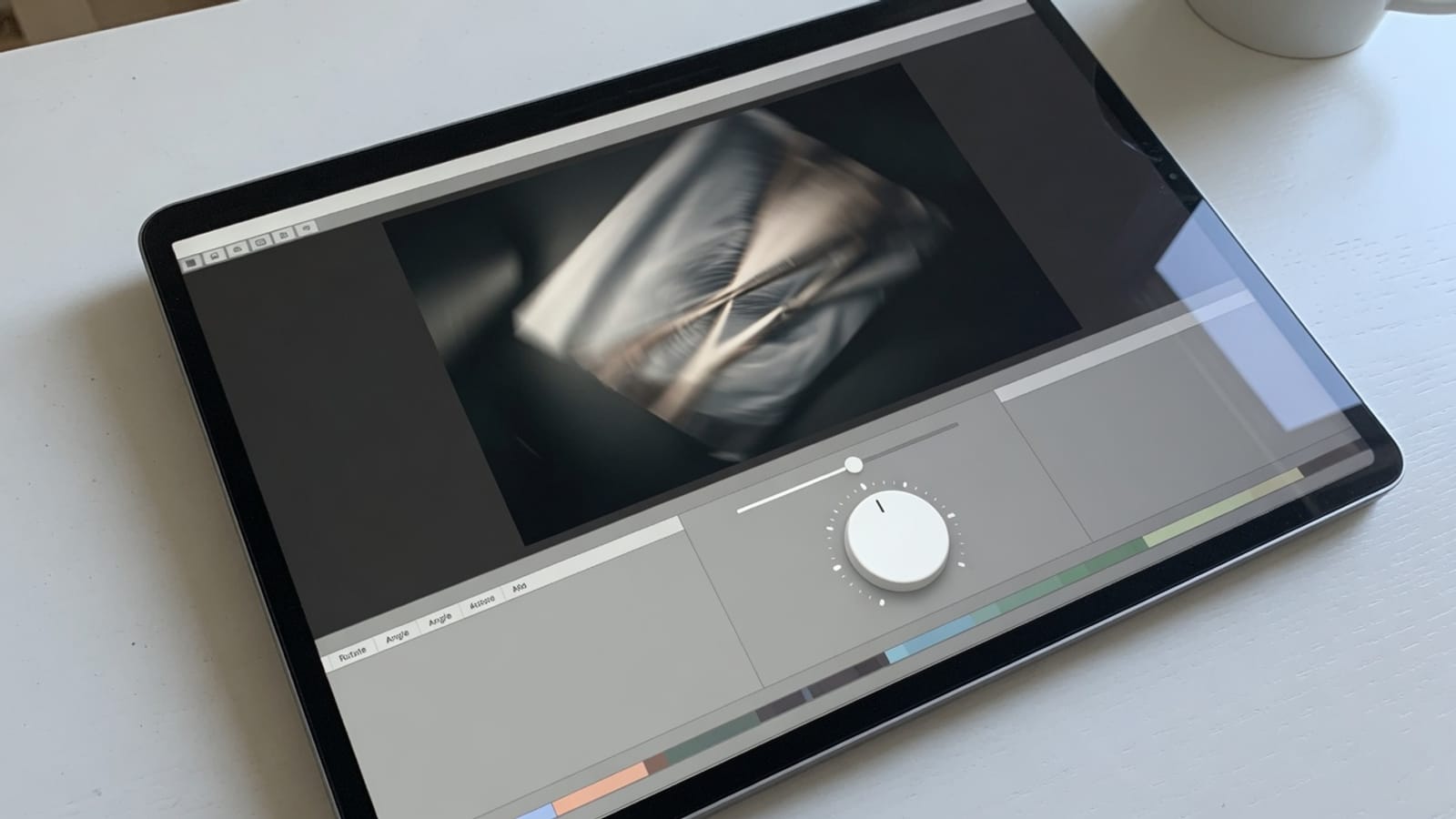
Step 02
Choose 90, 180 or 270 degrees.
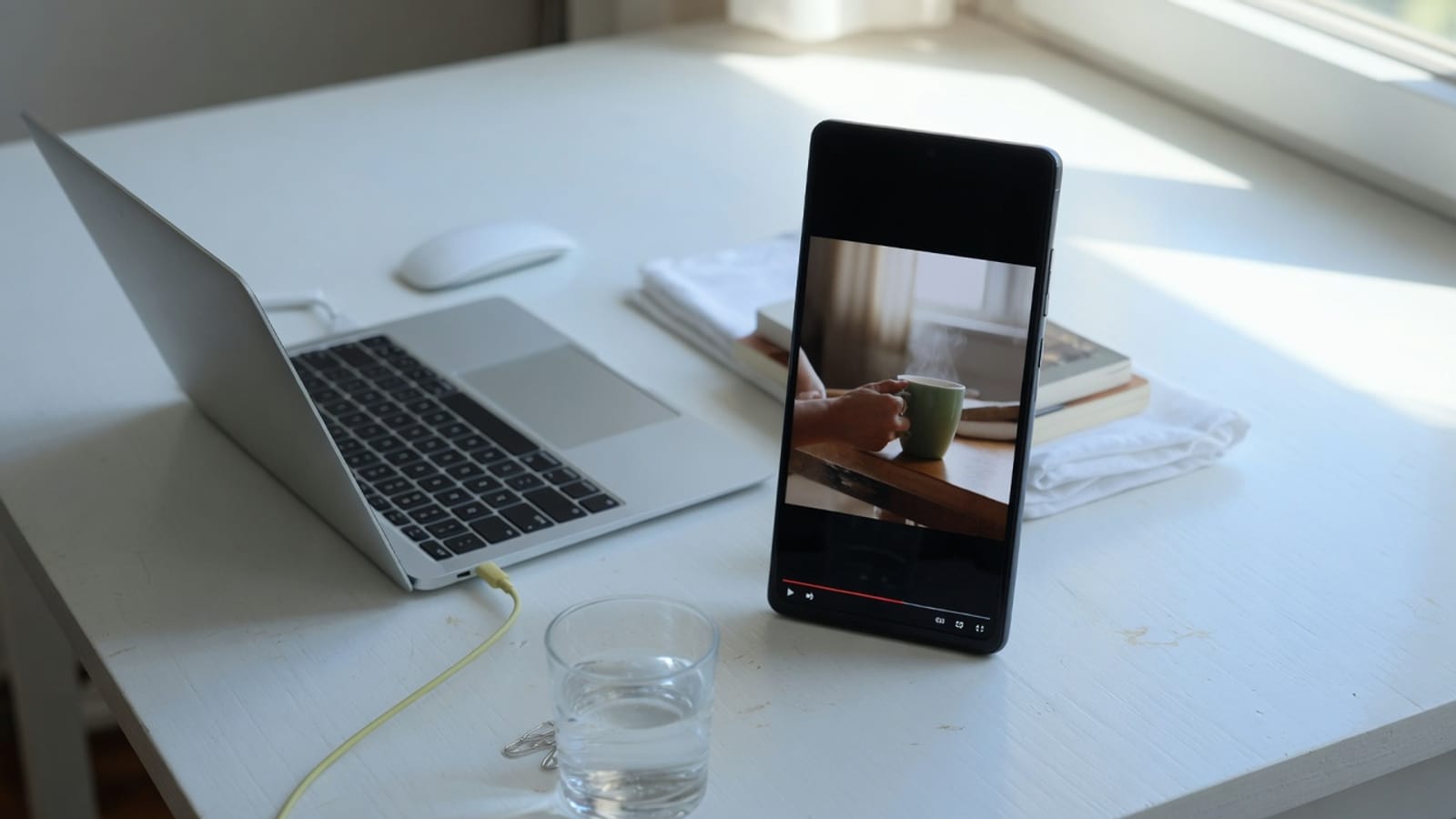
Step 03
Confirm orientation in a second player or target app.
What it is
Use rotation when phone or camera footage displays sideways or upside down. The controls offer 90, 180 and 270 degrees. rotate video online on this page means selecting a file you already have permission to use, completing the job locally, and downloading a physically rotated MP4. The chosen angle is applied during video processing and rotation metadata is disabled, so pixels are exported in the corrected orientation instead of relying on every player to honor a flag.
Phone orientation errors: Correct a clip captured with stale device orientation metadata. Scanned overhead footage: Turn a camera view into the intended reading direction. Messaging compatibility: Bake orientation into pixels for apps that ignore metadata. Upside-down cameras: Use 180 degrees when both axes need correction. These are distinct reasons to rotate video; they are not promises that every codec or file size will work on every device.
Orientation
Phones often store a flag instead of rewriting pixels. If Discord or a browser still plays the clip sideways, rotate video here and export a new MP4.
90°
The usual phone mistake. Rotate video 90 degrees and check that faces are not upside down before you share.
180°
Use 180 when the clip is upside down. A second 90 would lean it the wrong way.
270°
270 is the opposite portrait from 90. Preview once; do not stack rotates on the same output.
Then trim
Rotate video before trim or crop so start times and aspect boxes match what you actually see.
Use cases
Correct a clip captured with stale device orientation metadata.
Turn a camera view into the intended reading direction.
Bake orientation into pixels for apps that ignore metadata.
Use 180 degrees when both axes need correction.
Quality
Rotation itself does not invent detail, but the export is re-encoded to H.264/AAC. Text and fine lines deserve a quick playback check. The current controls rotate only; they do not expose horizontal or vertical flip. Width and height swap for quarter turns. A local browser tool cannot make lossy re-encoding mathematically lossless. Keep the master file, compare motion and audio after export, and change one setting at a time if the first result is not suitable.
Changing metadata can be instant but inconsistent across players. A physical re-encode takes longer and is more likely to display the same way in messaging apps. A desktop editor remains the better choice for multi-track timelines, frame-accurate finishing, color work, subtitles, or archival masters. CompressVideo is intended for a focused rotate video job where a quick local result matters more than a full editing suite.
Privacy
The media path is local by design. Your file becomes an in-memory or temporary on-device input for browser media APIs, then the finished a physically rotated MP4 is offered as a download. No account or cloud-drive password is requested. Close the tab after downloading when you use a shared computer, and follow workplace policy when a browser tool is not approved for confidential material.
The current controls rotate only; they do not expose horizontal or vertical flip. Width and height swap for quarter turns. If the job fails, first try a current desktop Chrome or Edge build. Next, close memory-heavy tabs, shorten the source, or use a smaller resolution. An H.264/AAC MP4 is the most dependable fallback input for video workflows. A retry cannot fix a codec the browser cannot decode, so repeated failures with the same file usually require a compatible source export.
Practical notes
1. Select the sideways or upside-down video. 2. Choose 90, 180 or 270 degrees. 3. Start local processing. 4. Wait for the MP4 download. 5. Confirm orientation in a second player or target app. The output is a physically rotated MP4. Review the file name, extension, playback, duration, dimensions, sound, and size before sharing it.
The chosen angle is applied during video processing and rotation metadata is disabled, so pixels are exported in the corrected orientation instead of relying on every player to honor a flag. Rotation itself does not invent detail, but the export is re-encoded to H.264/AAC. Text and fine lines deserve a quick playback check. This is the practical difference between a real browser media tool and a page that only renames a file extension. The result is produced from decoded media samples or a validated conversion path, subject to the codec support exposed by the browser and device.
Return to the tool above when you are ready to rotate video. Use the source master, choose the smallest change that completes the task, and rotate video once. If the result is wrong, adjust the relevant setting instead of repeatedly re-encoding the same output. This keeps the rotate video workflow understandable and limits avoidable quality loss.
FAQ
Select the MP4, choose 90 degrees, export, and verify whether clockwise rotation matches the intended orientation.
No. It disables rotation metadata and applies the angle during processing for a physically oriented output.
Not in the current interface. Rotation and mirroring are different operations.
Yes. A quarter turn swaps the displayed width and height.
Yes. The video rotation workflow is free and does not require an account. Processing uses your browser and the download is available when the local job finishes.
No. The rotate video job reads the selected file with browser media APIs and does not send it to an encoding server. Analytics must not include file contents, names, frames, audio, or exported media.
Desktop Chrome or Edge is the safest choice for rotate video because codec support depends on WebCodecs. The current controls rotate only; they do not expose horizontal or vertical flip. Width and height swap for quarter turns.
No. The rotate video output has no CompressVideo stamp, and the completed download is not placed behind a subscription prompt.
Mobile Safari or Chrome can open a file already on the device. Desktop Chrome or Edge is more reliable for long or high-resolution sources because WebCodecs coverage and memory are stronger there.
The current controls rotate only; they do not expose horizontal or vertical flip. Width and height swap for quarter turns. Start with an H.264 MP4 when a special camera file fails. A remote URL or social-network link is not fetched.
Drop a local file, set the output, and download. Nothing is uploaded.
Rotate video now